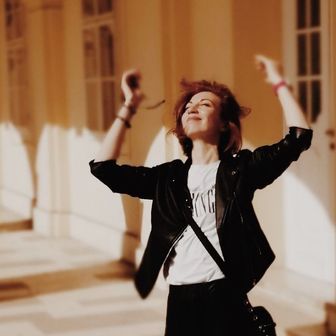
@kattvasileva / Founder
Official Host of the International Slow Art Day 2026 in Russia
Official Host of the International Slow Art Day 2026 in Russia
Art•Sanatorium is my independent project dedicated to the resonance that emerges when we reclaim the gift of time.
I created this space as an alternative to conventional art consumption. Here, a brushstroke transforms into a personal memory, and the silence of a gallery becomes a space for the most essential conversation. In this practice, art is not a display to be viewed, but a catalyst to find your footing and reconnect with what lies beneath the everyday noise.
Welcome to a space where art becomes a state of being, and you become a witness to your own depth!
About ART•Sanatorium & Founder Katt Vasileva
Art•Sanatorium is an independent practice exploring Slow Art, contemplation, aesthetics, and the philosophy of presence.
This project is for those:
▸ Seek silence and a sense of ground through internal crises, choosing depth over speed.
▸ Feel a creative hunger but find no place for it in their "office" or professional life.
▸ Have burned out creatively and need to resuscitate their voice and the meaning behind it.
▸ Are ready to "hack" art through personal perception, leaving textbook interpretations to the art historians and curators.
The mission
To create spaces where art ceases to be a mere object and becomes a state of being.
This project is for those:
▸ Seek silence and a sense of ground through internal crises, choosing depth over speed.
▸ Feel a creative hunger but find no place for it in their "office" or professional life.
▸ Have burned out creatively and need to resuscitate their voice and the meaning behind it.
▸ Are ready to "hack" art through personal perception, leaving textbook interpretations to the art historians and curators.
The mission
To create spaces where art ceases to be a mere object and becomes a state of being.
Art•Sanatorium provides a sanctuary to slow down, inhabit the silence, and restore a profound connection with oneself. Through the philosophy of slow contemplation, the project returns art to its vital purpose: to serve as a source of personal meaning, inspiration, and restoration.
Hello. I'm Katt Vasileva,
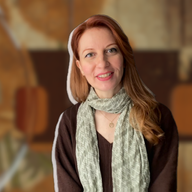
an independent art mediator and researcher.
I develop chamber contemplative experiences through my proprietary method, Philosophical Art Dialogues
My journey began not with theory, but with a visceral response. At the age of fourteen, I visited Montmartre in Paris and the Dresden Gallery for the first time, and it left an impression far deeper than any other tourist landmark. Something inside me shifted.
Before becoming an art mediator, I worked in a museum—creating educational projects and curating exhibition events. I took part in archaeological excavations, spent several years in international tourism developing bespoke travel routes, and led psychological trainings and art practices for corporate teams.
Over the years, I have learned to speak with art in my own language. Later, out of a personal existential crisis, my own method was born—Philosophical Art Dialogues. During that time, art became the only way for me to find new meaning and a sense of ground.
Today, I am developing Art•Sanatorium as an independent project. I am not interested in retelling canonical interpretations—I leave that to art historians and curators. My path is about "hacking" meanings through personal perception. I believe that art is not a static object of study, but a living portal to the viewer’s own depth. A artist creates these portals, and I help people pass through them.
This is how I fulfill my personal mission: to bring a depth of feeling back into a modern world of superficial meanings.
Before becoming an art mediator, I worked in a museum—creating educational projects and curating exhibition events. I took part in archaeological excavations, spent several years in international tourism developing bespoke travel routes, and led psychological trainings and art practices for corporate teams.
Over the years, I have learned to speak with art in my own language. Later, out of a personal existential crisis, my own method was born—Philosophical Art Dialogues. During that time, art became the only way for me to find new meaning and a sense of ground.
Today, I am developing Art•Sanatorium as an independent project. I am not interested in retelling canonical interpretations—I leave that to art historians and curators. My path is about "hacking" meanings through personal perception. I believe that art is not a static object of study, but a living portal to the viewer’s own depth. A artist creates these portals, and I help people pass through them.
This is how I fulfill my personal mission: to bring a depth of feeling back into a modern world of superficial meanings.
The Method
© Philosophical Art Dialogues — a Slow Contemplative Experience
A Phenomenological Framework for Deep Contemplation
Moving beyond traditional art mediation, this proprietary method synthesizes existential inquiry and the Slow Art movement principles. It is structured around a rigorous three-stage framework:
1/ Interruption (The Threshold)
Learning to notice the "jagged edges of reality" — those points where the gaze catches once the automation of daily life is suspended.
2/ Immersion (The Encounter)
The space of the artwork becomes a personal territory. This is where a profound trust in one’s own internal resonance is cultivated.
3/ Resonance (The Existential Dialogue)
The final stage, where the aesthetic experience transcends observation and transforms into a personal existential insight.
1/ Interruption (The Threshold)
Learning to notice the "jagged edges of reality" — those points where the gaze catches once the automation of daily life is suspended.
2/ Immersion (The Encounter)
The space of the artwork becomes a personal territory. This is where a profound trust in one’s own internal resonance is cultivated.
3/ Resonance (The Existential Dialogue)
The final stage, where the aesthetic experience transcends observation and transforms into a personal existential insight.
Methodology registered and deposited. Certificate of Authorship №1444-059-135. All rights reserved.
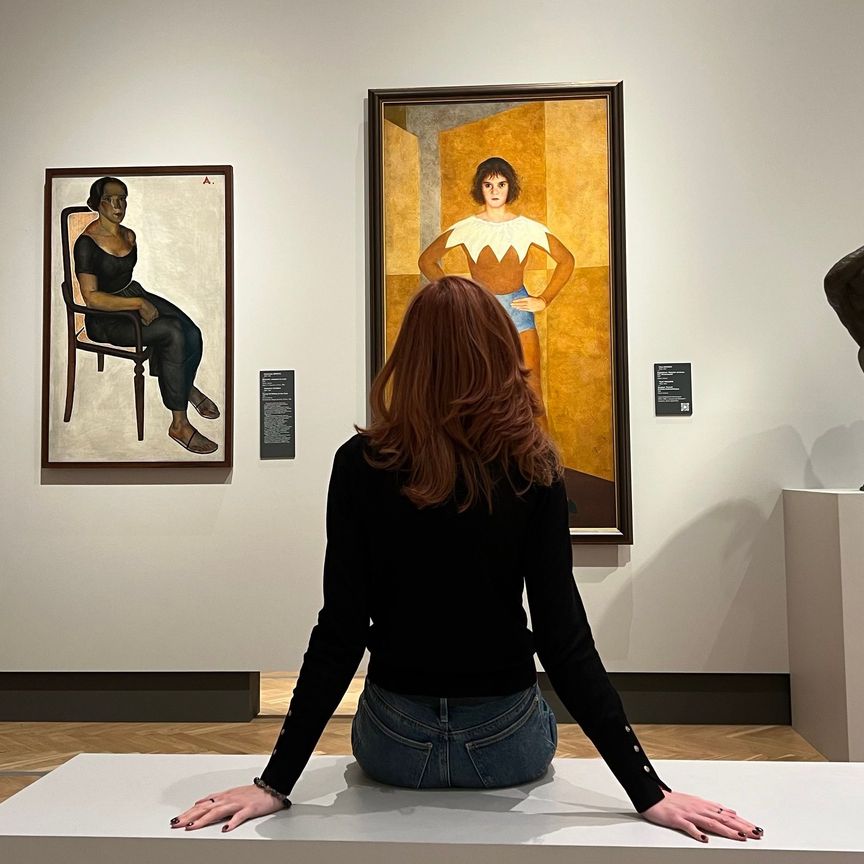
Slow Art
Slow Art
An international movement dedicated to the slow contemplation of art
The origins of Slow Art can be traced back to the art of the past (the creation of paintings and sculptures has always been a slow process), but it emerged as a conscious movement in the late 2000s to early 2010s.
The founder of the movement, artist Phyl Terry, once invited a group of friends to a museum with a simple task: to look at just five works of art for one hour and then discuss their experience over lunch. This simple idea later grew into a global annual event, now supported by hundreds of museums and art professionals worldwide.
The founder of the movement, artist Phyl Terry, once invited a group of friends to a museum with a simple task: to look at just five works of art for one hour and then discuss their experience over lunch. This simple idea later grew into a global annual event, now supported by hundreds of museums and art professionals worldwide.
Slow Art is a conscious protest against "clip-thinking," information overload, and the habit of "checking off" museums by spending mere seconds on each masterpiece. It reminds us of a simple truth: art exists not to be consumed, but to be experienced.
Art•Sanatorium is proud to be an official host of Slow Art Day 2026 in Russia
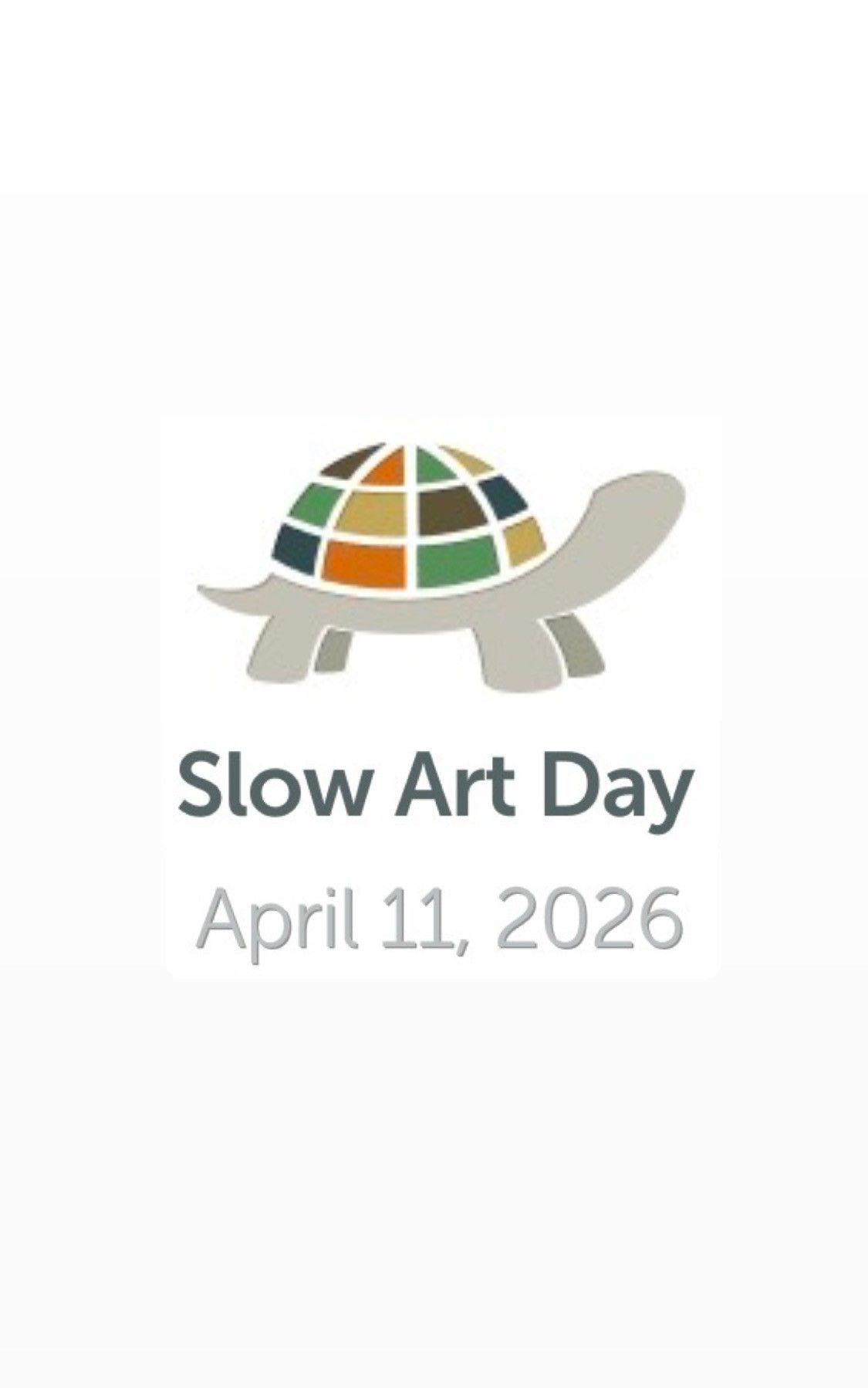
On April 11, 2026, we will hold the event in St. Petersburg.
It will be an intimate and mindful gathering.
We will look at the art slowly, not just with our eyes, but with our feelings.
It will be an intimate and mindful gathering.
We will look at the art slowly, not just with our eyes, but with our feelings.
As an independent practitioner, I act as a bridge between this global movement and the local urban context. My goal is to transform the culture of observation into a vital tool for mental clarity and existential depth. Whether in a private studio or a hidden gallery, we celebrate the power of a genuine, slow dialogue between the viewer and the artwork.
YouTube Channel
On my YouTube channel, I show how I converse with paintings and find my own meanings within them.
This is not an art blog in the conventional sense. It is a channel where art becomes a state of being and a source of personal insight. It is a Slow Art space for those seeking silence, depth, and answers to existential questions within art.
This is not an art blog in the conventional sense. It is a channel where art becomes a state of being and a source of personal insight. It is a Slow Art space for those seeking silence, depth, and answers to existential questions within art.
All videos have English subtitles.

© Арт•Санаториум (Art•Sanatorium) | 2023-2026
Все права защищены
Васильева Екатерина Анатольевна
ИНН 602505250482
